Sole, sale, sapori di Sicilia

Il visitatore che arriva in questa punta di Sicilia, defilata dai principali itinerari turistici, sceglie solitamente Marsala come destinazione per due motivi principali: il vino e la visita archeologica dell’Isola di Mothia, antica città fenicia situata sull’Isola di San Pantaleo, meta di un turismo sofisticato.
Forse, pianificando il viaggio, ha destinato un solo giorno al suo soggiorno nell’area, ma ciò che troverà sarà assolutamente inaspettato, tanto da meritare più tempo e attenzione.
Marsala, situata su Capo Boeo, si affaccia sulle Isole Egadi, con Favignana in primo piano.
Fondata per dare rifugio agli abitanti della colonia fenicia di Mothia, che fuggivano dalla distruzione ordinata dal tiranno di Siracusa Dionisio I, la città fiorì in epoca romana come centro di scambi e commerci tra i popoli del Mediterraneo. Successivamente distrutta dai Vandali, rinacque sotto la dominazione araba con il nome di Mars-Alì (Porto grande). Quel grande porto le attirò l’attenzione degli Aragonesi, grazie ai quali visse un lungo periodo di prosperità e che avvicinò anche l’inglese John Woodhouse, attratto dalla qualità del vino prodotto nelle campagne circostanti, che si estendono fino a Salemi, dove i contadini lo conservavano in perpetuum, rabboccando le botti con vino nuovo per mantenerne i livelli. Woodhouse riuscì a renderlo trasportabile grazie all’aggiunta di una buona dose di acquavite di vino. Così nacque un prodotto simile al Porto e ai vini spagnoli di Jerez, molto richiesti in Gran Bretagna.
Woodhouse definì il futuro di Marsala e del suo vino, delle famiglie inglesi che vi si stabilirono (come i Whitaker, la cui fondazione possiede ancora l’Isola di Mothia, custode della loro residenza), e delle grandi famiglie italiane come i Florio. A tal proposito, ricordo l’interessante libro “I leoni di Sicilia” di Stefania Auci, che racconta uno spaccato della società siciliana attraverso la saga della famiglia Florio.
Oggi la città di Marsala offre ai viaggiatori visite archeologiche e artistiche di altissimo livello. Entrare nelle Cantine Florio (prenotazione necessaria) non è solo un'esperienza enogastronomica, ma ha anche un grandissimo valore storico e sociologico.
Lo Stagnone, la laguna più vasta della Sicilia, è un’altra straordinaria esperienza da vivere nel territorio di Marsala, con le sue quattro isole: San Pantaleo (Mozia), Isola Grande, Schola e Santa Maria.
Coloratissimi kite-surf sfrecciano veloci in queste acque poco profonde, talvolta bassissime, da 1 metro a 50 centimetri, tra le poche imbarcazioni che trasportano i visitatori verso le isole, mantenendo un rispettoso silenzio per non disturbare le specie protette della Riserva Naturale.
Chi ama la natura e i grandi panorami non può che innamorarsi di questo luogo. Mothia è raggiungibile con una barca privata e visitabile a piedi. Il museo, allestito nell’antica residenza Whitaker, espone numerose testimonianze storiche, tra cui il celebre “Giovinetto di Mothia”, una statua in marmo di scuola greca risalente alla prima metà del V secolo a.C.
L’isola, però, riserva altre sorprese per chi ama il movimento, estendendosi per quasi quarantacinque ettari. Vi si trovano fortificazioni, antiche strade, resti delle porte della città, la necropoli, l’area industriale con pozzi e impianti di produzione, santuari, pavimentazioni musive nelle abitazioni dell’area residenziale, la piscina sacra (Kothon), la casermetta e i resti del bacino di carenaggio. Nel 2006, Mothia (Mozia o Motya) è stata inserita tra i beni Patrimonio dell’Umanità dell’UNESCO insieme all’antica Lilibeo (la Marsala romana).
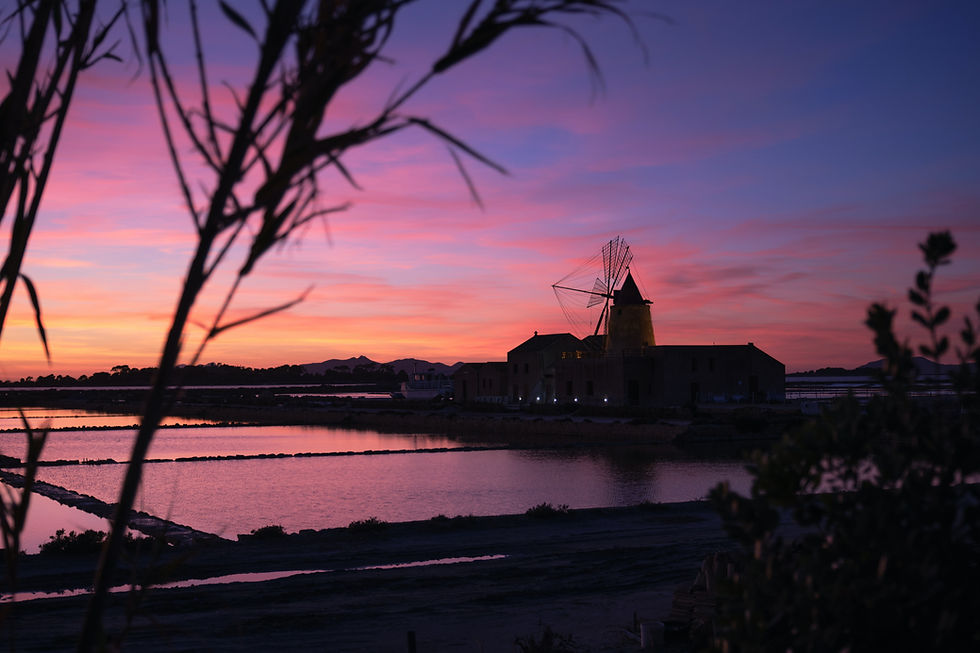
La Riserva dello Stagnone non si esaurisce con Mothia: l’obiettivo della macchina fotografica (o dello smartphone) sarà catturato dai colori delle saline, dal bianco abbagliante dei cumuli di sale al rosso di una micro-alga, la Dunaliella Salina, dal mattone dei mulini a vento, al blu del cielo terso, fino al rosa dei fenicotteri in autunno, stagione di passaggio, a indicare che non esiste una stagione unica per visitare questa magnifica laguna.
Le saline Ettore e Infersa offrono varie esperienze, come una piacevole passeggiata lungo gli argini che dividono le vasche, la raccolta del sale con vanghe e carriole, o persino il soggiorno sull’isola lunga, immersi nel silenzio della natura. Nei mesi di giugno, luglio e agosto, è possibile fare un bagno nelle saline o esplorare l’isola in bicicletta, per poi concedersi un pranzo delizioso nel ristorante locale.
Fluttuare nel sale, galleggiando buffamente come palloni, è un’esperienza divertente e adatta anche a un team building. Tuttavia, la bellezza di questo straordinario paesaggio potrebbe costituire una cornice naturale per un matrimonio fuori dagli schemi.
Il pacchetto “The Salt Experience” offre l’opportunità di vivere un’avventura unica in un angolo di paradiso, includendo anche un pernottamento in resort e una cena sotto le stelle.
Sun, Salt, and Flavours of Sicily
The visitor who arrives at this tip of Sicily, secluded from the main tourist routes, usually chooses Marsala as a destination for two main reasons: wine and the archaeological visit to the Island of Mothia, an ancient Phoenician city located on the Island of San Pantaleo, a destination for sophisticated tourism.
Perhaps, when planning the trip, they have only allocated one day for their stay in the area, but what they will find is absolutely unexpected, worthy of more time and attention.
Marsala, located on Cape Boeo, overlooks the Egadi Islands, with Favignana in the foreground.
Founded to provide refuge to the inhabitants of the Phoenician colony of Mothia, fleeing from the destruction ordered by the tyrant of Syracuse Dionysius I, the city flourished during Roman times as a centre for trade and commerce among the peoples of the Mediterranean. Later destroyed by the Vandals, it was reborn under Arab rule with the name Mars-Alì (Great Port). This great port drew the attention of the Aragonese, under whose influence it experienced a long period of prosperity, and also attracted the Englishman John Woodhouse, fascinated by the quality of the wine produced in the surrounding countryside, extending as far as Salemi, where farmers would preserve it in perpetuum, refilling barrels with new wine to maintain the levels. Woodhouse managed to make it transportable by adding a good dose of wine brandy. Thus, it became a product similar to Port and the Spanish wines of Jerez, which were highly sought after in Great Britain.
Woodhouse shaped the future of Marsala and its wine, the English families who settled there (such as the Whitaker family, whose foundation still owns the Island of Mothia, guardian of their residence), and the great Italian families like the Florio. On this subject, I recommend the fascinating book “The Lions of Sicily” by Stefania Auci, which offers an insight into Sicilian society through the saga of the Florio family.
Today, the city of Marsala offers travellers high-level archaeological and artistic visits. Entering the Florio Wineries (reservation required) is not just a tasting experience but one of great historical and sociological value.
The Stagnone, the largest lagoon in Sicily, is another extraordinary experience to be enjoyed in the Marsala area, with its four islands: San Pantaleo (Mozia), Isola Grande, Schola, and Santa Maria.
Colourful kite-surfers swiftly glide across these shallow waters, sometimes extremely shallow, from 1 metre to 50 centimetres, between the few boats transporting visitors to the islands, maintaining a respectful silence so as not to disturb the protected species of the Nature Reserve.
Nature lovers and those who appreciate wide panoramas cannot help but fall in love with this place. Mothia can be reached by private boat and explored on foot. The museum, housed in the old Whitaker residence, displays numerous historical artefacts, including the famous “Youth of Mothia,” a marble statue of the Greek school, dating back to the first half of the 5th century BC.
The island, however, holds further surprises for those who enjoy activity, as it stretches over almost forty-five hectares. Here, one can find fortifications, ancient roads, remains of city gates, a necropolis, an industrial area with wells and production plants, sanctuaries, mosaic floors in the residential area’s houses, the sacred pool (Kothon), the barracks, and what remains of the dry dock. In 2006, Mothia (Mozia or Motya) was listed as a UNESCO World Heritage Site alongside ancient Lilibeo (Roman Marsala).
The Stagnone Nature Reserve does not end with Mothia: the lens of your camera (or smartphone) will be further captivated by the colours of the salt pans: from the dazzling white of the salt mounds to the red of the micro-alga Dunaliella Salina, the brick red of the windmills, the clear blue of the sky, and the pink of the flamingos in autumn, a transitional season, signifying that there is no single time of year to visit this magnificent lagoon.
The Ettore and Infersa salt pans offer various experiences, such as a pleasant walk along the dykes dividing the basins, salt harvesting with spades and wheelbarrows, or even a stay on the long island, immersed in the silence of nature. In June, July, and August, it is possible to take a dip in the salt pans or explore the island by bike, before enjoying a delicious lunch at the local restaurant.
Floating in the salty waters, amusingly bobbing like balls, is a delightful experience and perfect for team building activities. However, the beauty of this extraordinary landscape could also provide a natural setting for a wedding far from the conventional.
The “Salt Experience” package offers the opportunity to live a unique adventure in a corner of paradise, including an overnight stay at the resort and a dinner under the stars.


Commenti